Support Wildlife Raise Boys: A Designer’s Embroidery Review
As an experienced designer who spends half my life staring at digitized files and the other half pulling bobbins out of jammed machines, I approach every new machine embroidery design with a healthy dose of skepticism. We have all been there: you download a file that looks crisp on the screen, only to watch it turn into a bird’s nest of thread on your favorite hoodie. Today, I am taking a close look at Support Wildlife Raise Boys, a piece that has been circulating in our Crafts community. This is not just a quick glance; this is a practical evaluation for those of us who need to know if a design will hold up in the real world of client orders and handmade sales.
First Impressions and Visual Personality
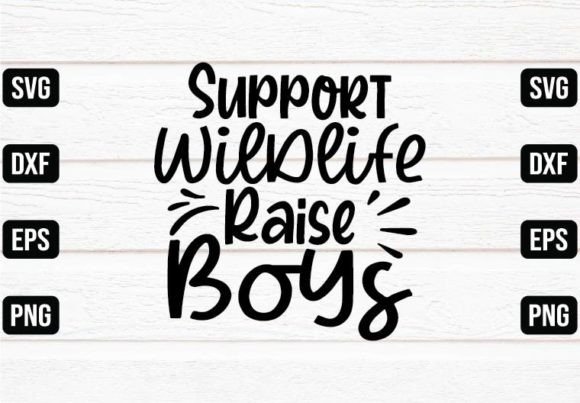
The first thing that strikes me about Support Wildlife Raise Boys is its bold, unapologetic humor. In the world of Graphics, typography-driven designs can often feel flat, but this one carries a distinct mood. It feels rugged yet playful, striking a balance that appeals to a specific niche of parents and outdoor enthusiasts. The layout suggests a strong central focus, which is crucial for embroidery. When I visualize this stitched out, I am not seeing delicate, wispy lines that might get lost. Instead, I see a design that demands attention, likely relying on solid shapes and clear lettering to make its statement.
For an embroidery project, visual personality is everything. This design does not try to be subtle. It is meant to be read from across the room. That confidence translates well to apparel, where the goal is often immediate recognition. However, as a reviewer, I immediately ask myself: how does this translate from a vector or digital image into actual thread? The answer lies in the details we cannot always see in the preview thumbnail.
Real-World Application: The Sweatshirt Test
To truly evaluate Support Wildlife Raise Boys, I imagined a real-life scenario. Let’s say a customer comes to my small shop requesting a custom gift for a father who loves hunting and raising his sons. A standard tote bag design might work, but a heavyweight sweatshirt feels more appropriate for the rugged vibe of the text. I picture this as a chest-left logo or a full-back statement piece.
If I were stitching this onto a cotton-blend sweatshirt, the key would be managing the stitch density. Humorous slogans often rely on clean, sans-serif fonts or bold serif styles. If the letters are too thin, they disappear into the fabric texture. If they are too dense, the garment puckers. Assuming this design is optimized for general use, it should perform well on medium-weight fabrics. The "wildlife" aspect suggests earth tones—forest greens, browns, and creams—would be the ideal thread colors to enhance the theme without overpowering the message.
This is where the concept of a personalized gift shines. It is not just about slapping a design on a shirt; it is about creating a finished product that feels intentional. For an Etsy seller or craft business owner, offering this on a high-quality blank ensures the perceived value matches the price point. Customers are willing to pay more for embroidery that looks professional, not like a home experiment gone wrong.
Navigating Fabric and Hoop Constraints
While Support Wildlife Raise Boys has strong visual appeal, we must discuss where it requires caution. Not every surface is created equal. If you are planning to use this as an embroidered patch or on a structured cap, you need to verify the dimensions. Curved surfaces like caps distort designs if they are too wide. A design with long horizontal text can look warped if not properly hooped and stabilized.
Furthermore, consider the hoop size. If this design is large, it may not fit in a standard 4x4 inch hoop, requiring a 5x7 or larger frame. Always check the specific file details before starting. For textured fabrics like terry cloth towels or fuzzy fleece blankets, a simple running stitch outline might get lost. In these cases, a fill stitch or a satin border becomes necessary to define the edges. If the design includes tiny details or intricate wildlife illustrations alongside the text, those elements might merge on thick fabrics. I recommend testing on scrap fabric first, especially if you are using a stabilizer that differs from your usual choice.
Dark fabrics present another challenge. If the design relies on light threads for contrast, ensure the underlay stitches are sufficient to prevent the dark fabric from showing through the top stitching. This is a common issue with custom apparel where black or navy garments are popular. A proper digitizing job will account for this, but it is always wise to run a test stitch-out.
Commercial Viability and Brand Consistency
For small shop product lines, consistency is key. Support Wildlife Raise Boys fits neatly into the outdoor, family-oriented niche. It is not a generic design; it speaks to a specific lifestyle. This specificity is a strength for digital embroidery file sellers and handmade product creators. It allows for targeted marketing. You are not selling to everyone; you are selling to dads, grandpas, and outdoorsmen who take pride in their role.
When creating printable mockup images for your online store, show this design in context. Place it on a flannel shirt, a canvas tote, or a rustic pillow cover. This helps buyers visualize the embroidery file in their own homes. Remember, the perceived quality of the digital asset affects the trust in your brand. If the preview looks pixelated or poorly spaced, customers will assume the stitched result will be equally flawed.
Practical Notes for the Serious Stitcher
Before you commit to a large batch of holiday embroidery gifts or baby embroidery items, keep these practical tips in mind:
- Check the License: The description mentions it is an instant download compatible with cutting software like Cricut and Silhouette. However, for machine embroidery, ensure you have the correct file formats (such as PES, DST, or JEF) for your specific machine. Confirm whether the license allows for commercial use of finished physical items.
- Test Stitch Density: High density can cause puckering on thin fabrics. If the design feels stiff after stitching, consider adding a tear-away stabilizer for extra support.
- Contrast is King: Use thread colors that stand out against your fabric. For a wildlife theme, natural tones work well, but ensure there is enough contrast for readability.
- Inspect Small Details: Zoom in on the digital file. Are there any stray nodes or overlapping paths that could cause thread breaks? Clean up the file if necessary before loading it into your machine.
In conclusion, Support Wildlife Raise Boys is a design with character. It is not just a collection of stitches; it is a statement piece that, when executed correctly, can elevate a simple garment into a cherished keepsake. For the creative entrepreneur or hobbyist, it offers a fun challenge in balancing humor with technical precision. Treat it with the respect it deserves, test it thoroughly, and it will likely become a staple in your portfolio of reliable, best-selling designs.