Reviewing Michael Myers Always Fresh Butcher for Embroidery
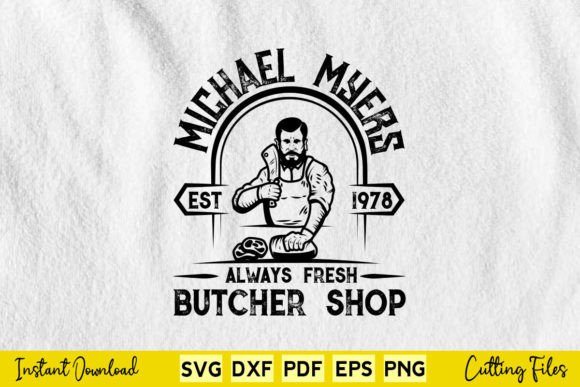
As a designer who spends half my life staring at stitch simulations and the other half wrestling with hoop tension, I have learned to look past the initial visual appeal of a digital file. When I first encountered the Michael Myers Always Fresh Butcher design, my immediate reaction was not just about the pop culture reference, but about its structural viability as an embroidery project. This is not merely a graphic; it is a potential asset for your craft business, provided you understand how it translates from screen to thread.
The theme is undeniably bold. It merges horror iconography with a mundane, almost humorous retail aesthetic. For an experienced embroidery product reviewer, this juxtaposition creates a specific mood: playful, edgy, and highly marketable to a niche audience. However, the real question is whether the layout and detail level can withstand the mechanical realities of machine embroidery. Let us break down how this design performs in real-world scenarios.
First Impressions and Visual Personality
The Michael Myers Always Fresh Butcher design relies heavily on strong silhouettes and clear typography. In the world of Graphics and Crafts, clarity is king. When I visualize this on a garment, I am looking for clean lines that will not blur into a messy blob after washing. The "Butcher" aspect suggests a rugged, industrial feel, which pairs well with the dense, solid nature of fill stitches. The visual personality is confident, making it an excellent candidate for statement pieces rather than subtle accents.
For small shop owners and Etsy sellers, this design offers a unique angle. It is not just another holiday motif; it is a year-round novelty item that can drive engagement during Halloween and maintain relevance through its quirky branding. The layout feels balanced, avoiding the common pitfall of overcrowding the hoop space, which is crucial for maintaining stitching clarity.
Real-World Application: From Sweatshirts to Tote Bags
I recently considered using a similar thematic approach for a custom embroidered sweatshirt order. The Michael Myers Always Fresh Butcher design would excel here. Sweatshirts provide a stable, thick fabric texture that supports heavier stitch densities without puckering. The design’s boldness stands out against heather gray or deep black fabrics, creating a high-contrast finished product that customers love.
Beyond apparel, consider the versatility of this digital embroidery file. It works exceptionally well on tote bag designs. A canvas tote provides a flat, sturdy surface where the details of the butcher theme can shine. For handmade product creators, this opens up avenues for boutique branding. Imagine a limited run of aprons for a themed party or a quirky kitchen towel set. The design’s humor translates well into functional items, increasing the perceived value of the personalized gift.
However, caution is needed when applying this to smaller items. While it might tempt you to create an embroidered patch or a cap design, you must evaluate the scale. If the text "Always Fresh" becomes too small, the legibility suffers. On curved surfaces like caps, the distortion can further complicate the reading of the text. I recommend testing the design on scrap fabric first, specifically mimicking the curvature and material of your intended final product.
Navigating Fabric and Stitch Challenges
One of the most critical aspects of using any machine embroidery design is understanding its interaction with fabric. The Michael Myers Always Fresh Butcher design likely utilizes a mix of satin stitch for borders or text and fill stitch for larger graphical elements. This combination requires careful attention to stabilizer choice. For stretchy fabrics like jersey t-shirts, a cut-away stabilizer is non-negotiable to prevent distortion. For woven fabrics like pillow covers or tea towels, a tear-away might suffice, but always test first.
Dark fabric presents another challenge. If you are stitching this on black hoodies, you need high-contrast thread colors. White or bright red threads will pop, but you must ensure the underlying fabric does not show through gaps in the stitching. This is where stitch density becomes vital. If the design is too sparse, the dark background will distract from the image. Conversely, if it is too dense, it can cause needle breaks or fabric stiffness. Review the stitch count and density settings in your software before hitting start.
Textured fabrics also require consideration. A fluffy towel or a ribbed sweater can hide fine details. Since this design leans towards bold shapes, it is more forgiving than intricate lace patterns, but you should still inspect small details in a zoomed-in view. Ensure that tiny corners are not so sharp that they pull or bunch up during stitching.
Commercial Viability and Brand Consistency
For commercial embroidery projects, consistency is key. The Michael Myers Always Fresh Butcher design offers a strong visual hook that can enhance brand recognition for shops specializing in pop culture or horror-themed merchandise. It builds customer trust by delivering a professional, clean look that suggests quality craftsmanship. When buyers see a crisp, well-executed design, they associate that quality with your entire store.
However, before listing this as a small shop product, you must confirm licensing. The product description indicates it is a digital product for printing on items like t-shirts and mugs, but embroidery rights can differ. Always verify whether the license allows for physical resale of embroidered items. Some designers restrict commercial use to a certain number of units or require an extended license. Do not assume; check the terms explicitly to protect your craft business.
Practical Designer Notes for Best Results
To ensure the best outcome with this design, follow these practical steps:
- Test on Scrap Fabric: Never stitch directly on your final garment. Use a similar fabric weight and texture to check for puckering or thread breaks.
- Check Thread Color Contrast: Use a color chart to simulate how the design looks on different backgrounds. High contrast is essential for readability.
- Review Stitch Density: If your machine allows, adjust the density slightly if you find the design too stiff or too loose on your test piece.
- Confirm Hoop Size: Ensure the design fits comfortably within your hoop with adequate margin for clamping. Do not push the edges.
- Inspect Small Details: Zoom in on the text and fine lines. If elements are thinner than 0.5mm, they may not stitch out cleanly.
- Use Proper Stabilizer: Match the stabilizer to the fabric. Wrong stabilizer choice is the number one cause of poor embroidery results.
- Verify Licensing: Confirm that the license permits commercial use for physical goods if you plan to sell the finished product.
In conclusion, the Michael Myers Always Fresh Butcher design is a compelling addition to your library of design assets. It balances humor with strong visual structure, making it suitable for a variety of embroidery projects from sweatshirt embroidery to home decor. By approaching it with a critical eye for technical execution and respecting the nuances of fabric and stitch behavior, you can transform this digital file into a high-value handmade product that resonates with your audience.